
- [email protected]
- Fevzipaşa Mah. Kınalı Kavşağı Cad. No:123 ve 123/1 Silivri / İstanbul

Single Layer vs Double Layer Waterproofing
Single Layer vs Double Layer Waterproofing
Waterproofing systems can be designed as either single-layer or double-layer applications, depending on project requirements, climate conditions, and performance expectations.
The selection between these two systems significantly impacts durability, cost, and long-term maintenance.
Understanding their structural differences is essential for correct system specification.
1️⃣ Single Layer Waterproofing System
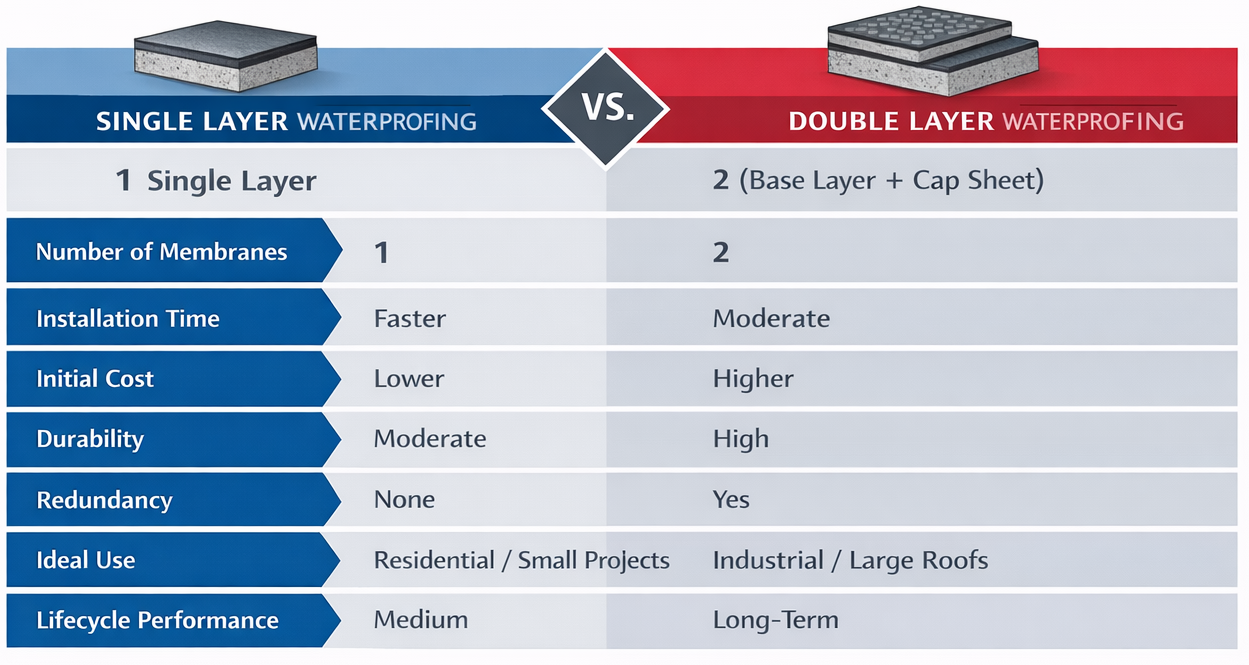
A single-layer system consists of one waterproofing membrane applied directly onto the prepared substrate.
Key Characteristics
- One membrane layer
- Faster installation
- Lower initial material cost
- Reduced labor time
Advantages
- Economical for small or low-risk projects
- Suitable for residential roofs
- Faster project completion
- Less material consumption
Considerations
- Lower redundancy
- Higher risk if membrane is damaged
- Less resistance to extreme weather conditions
- Shorter service life compared to double-layer systems
Single-layer systems are generally preferred in moderate climates and projects where budget constraints are primary considerations.
2️⃣ Double Layer Waterproofing System
A double-layer system consists of two membrane layers:
- Base layer (underlayer)
- Cap sheet (top layer, often mineral surfaced)
The layers are fully bonded to provide enhanced protection.
Key Characteristics
- Two independent waterproofing barriers
- Higher mechanical strength
- Improved crack-bridging capacity
- Extended service life
Advantages
- Superior durability
- Better resistance to puncture and mechanical damage
- Improved performance under extreme weather
- Higher safety margin against leakage
Considerations
- Higher material and labor cost
- Longer installation time
- Increased system weight
Double-layer systems are typically recommended for industrial buildings, large commercial roofs, and harsh climate conditions.
When to Choose Single Layer
- Budget-sensitive projects
- Small roof areas
- Low mechanical exposure
- Mild climate conditions
When to Choose Double Layer
- Large industrial roofs
- High traffic areas
- Extreme hot or cold climates
- Projects requiring long warranty periods
Lifecycle Cost Perspective
Although double-layer systems require higher initial investment, they often provide better lifecycle cost efficiency due to:
- Reduced maintenance
- Lower repair frequency
- Extended service life
Waterproofing should be evaluated not only by installation cost but by long-term performance.
Conclusion
Single-layer waterproofing systems offer cost and time advantages for smaller or less demanding applications.
Double-layer systems provide enhanced durability, redundancy, and long-term reliability, making them ideal for demanding projects.
System selection should be based on project size, climate conditions, expected lifespan, and performance requirements.